
Welcoming people into your workspace sounds simple, but in reality it touches security, compliance, hospitality, and brand reputation all at once. If you have ever had an unexpected guest waiting at reception, a delivery wandering around looking lost, or compliance teams asking for visitor logs you cannot find, you already know why getting this right matters.
In this guide, We will break down how to manage office visitors step by step, using real world examples so you can build a reliable, secure, and friendly visitor journey from start to finish.
Why managing office visitors really matters
It is easy to think of visitor management as a small operational detail, but in reality it touches almost every part of your workplace. The way you manage guests at the door reflects your culture, your values, and your approach to safety. When you look at how to manage visitors properly, you are really protecting your people, your brand reputation, and your day to day efficiency.
Visitors often form their first impression of your company the moment they arrive. A smooth check in process, a friendly welcome, and a clear plan show that your organization is structured and trustworthy. On the other hand, confusion at reception, missing records, or unclear guidance can make even valued clients feel unsure. Good visitor management quietly removes friction so the focus stays on the purpose of the visit.
Security is another major reason it matters. Workplace hold sensitive data, equipment, and confidential conversations. Knowing exactly who is in the building, where they are allowed to go, and who they are meeting is essential. Strong processes also support compliance requirements and emergency readiness, since accurate visitor logs are available whenever they are needed.
Finally, there is the internal side. When employees understand the right way to invite, receive, and escort guests, the whole visitor experience becomes consistent. Teams work better together, reception staff are not overloaded, and leadership can trust that the workplace remains safe, organised, and welcoming. This is why how to manage office visitors should never be treated as an afterthought. It is a core part of running a professional, modern office.
Now that you have a clear picture of why visitor management is important, Let’s move on to how you can do it properly.
Building a clear visitor policy for your workplace
Before tools, kiosks, or badges come into the picture, you need clarity. A written visitor policy explains who qualifies as a visitor, how long they may stay, whether they need a host, and what level of identity verification is needed. Employees should actually understand the policy and not just skim it during onboarding. When the policy is simple, your reception team, security staff, and employees can all support it consistently.
Clear rules stop confusion. Guests feel guided instead of lost. And you avoid last minute scrambling when someone arrives unexpectedly.
For managing Gate passes, you can use our Gate pass form generator.
Reception workflows and how to manage office visitors smoothly
This is where the first live interaction happens, and it sets the tone. When planning how to manage office visitors, the reception experience should feel organized, calm, and human. Technology should assist, not overwhelm.
Two areas benefit most from structure:
- A simple and quick check in process that avoids long queues
- Automatic host notifications so visitors do not wait unnecessarily
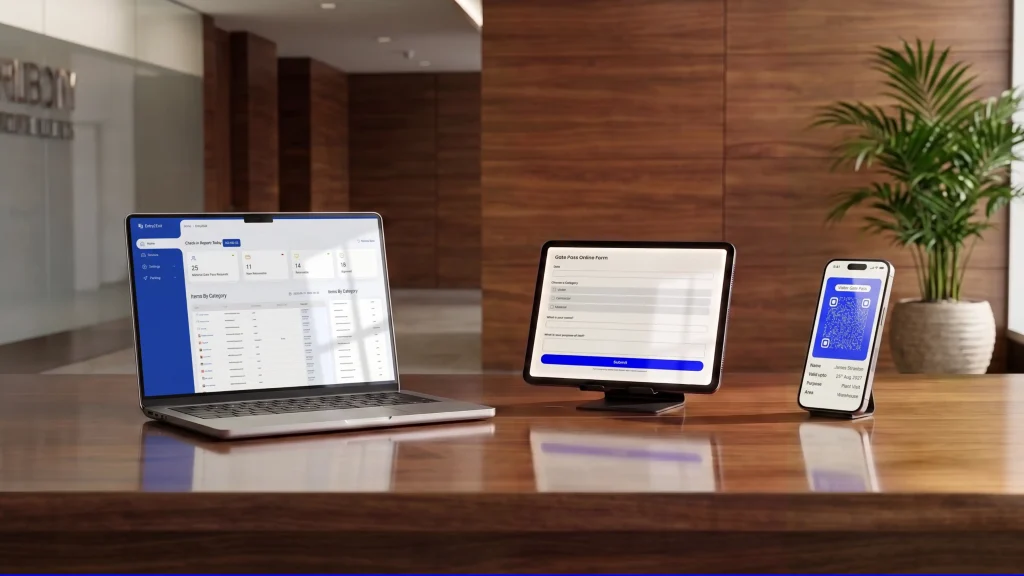
A Modern visitor management system such as Entry2Exit Visitor Management System can make reception work feel lighter. Guests can pre register, receive a QR code, check in on arrival, and get a printed badge that clearly identifies them. This keeps things professional and prevents confusion about who belongs where.
Keeping visitors secure and compliant from day one
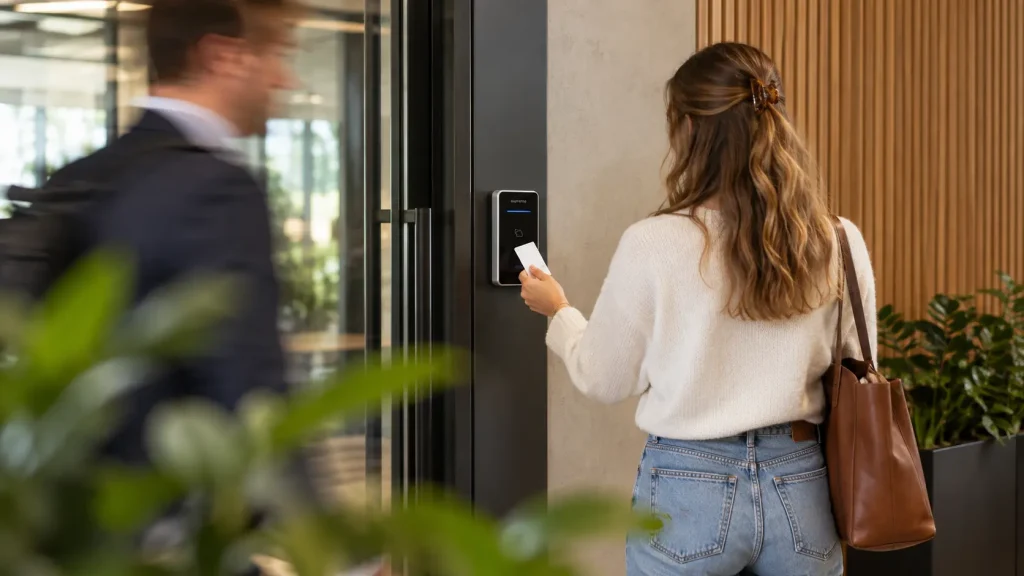
Security should not make people feel unwelcome, but it should be present everywhere in the background. Offices now use a mix of facial recognition systems, access card readers, and other access control integration where required. These tools help define which locations remain restricted while still maintaining a smooth flow for permitted guests.
Data compliance also matters. Visitor logs, ID checks, and sign in details need to be handled responsibly. Keep only what you need. Follow regional regulations. And define how long information is stored. When these rules are clear, you protect privacy while maintaining accountability.
Why modern offices rethink visitor management with technology
There was a time when paper registers, clipboards, and sticky name tags were considered enough. Today, they fall short. Offices need accurate real time knowledge of who is on site, and manual tools rarely provide that.
That is why businesses increasingly rethink how to manage visitors using technology. Automated check in systems create digital visitor logs, send alerts, sync with security platforms, and improve accuracy. Choosing a best visitor management system will connect directly with access control systems, meaning visitors receive only the access they require. Nothing more, nothing less.
This shift also reduces workload at reception. Instead of constant typing and logging, the front desk team can focus on greeting visitors properly.
Try Entry2Exit visitor log template for free.
Blending employee access with how to manage visitors in one system
Hybrid and flexible work mean that people constantly flow in and out of offices. Contractors might arrive for a day. Employees may work onsite three days a week. Vendors may require temporary authorization.
When considering how to manage visitors, it helps to manage employees and visitors in a unified platform. Attendance tracking, pass permissions, scheduling, and host approvals can all align.
This keeps your security view clear and real time. At any moment, you know who is inside the building and why.
Hospitality touches that shape every visit
Security is essential, but hospitality is what people notice. A warm greeting, clear directions, and simple comforts make a difference. Something as basic as providing free guest Wi Fi helps visitors stay productive and calm.
Simple design choices matter. Comfortable waiting areas. Accessible entrances. Clean signage. Friendly tone. These details build a positive brand perception long before meetings begin.
It is also helpful to train employees to welcome guests instead of expecting reception to do everything. Hosting is a shared responsibility.
Safety planning as part of how to manage visitors
Emergency readiness is part of how to manage visitors responsibly. You should always know who is onsite and where they entered from. Digital visitor lists make evacuation procedures cleaner and prevent guesswork.
This is not only useful during major incidents. Even small disruptions benefit from clear visibility. When systems automatically log entries, exits, and access permissions, you avoid relying on memory or incomplete paperwork.
Comparison table: Practical priorities for happier visitor experiences
| Priority Level | Action Area | Example Focus | Tools or Notes |
|---|---|---|---|
| Highest | Clear visitor policy | Define rules, approvals, ID standards | Internal policy framework |
| Highest | Secure sign in workflow | Fast check in without confusion | Digital visitor system |
| High | Host readiness | Employees prepared to receive guests | Internal communication |
| High | Access control | Card readers and biometric controls | Security integration |
| Medium | Guest comfort | Seating, refreshments, Wi Fi | Front office planning |
| Medium | Data governance | Retention timelines and privacy | Compliance alignment |
| Medium | Unified systems | Employee and visitor access in one place | Entry to exit style platform |
| Helpful | Visual branding | Clean signage and badge clarity | Simple design updates |
| Helpful | Accessibility | Support for elderly or disabled guests | Facility planning |
| Helpful | Ongoing training | Front desk and employee awareness | Internal workshops |
Table of Data Sourced From Multiple Accredited Sources
Final guidance from a visitor management specialist
As someone who works with visitor processes daily at Entry2Exit, here is the truth. The best systems are not just high tech. They are human centered. When you plan thoughtfully, integrate tools like digital visitor management system, facial recognition, and access card readers, and combine them with warm hospitality, you create visitor experience that feels safe, natural, and respectful.
Think of managing office visitors as a journey rather than a task at reception. Make it welcoming. Make it consistent. And keep refining it as your workplace evolves.
Many of our happy clients who have implemented Entry2Exit digital visitor management system in their offices have seen 70% increased visitor satisfaction from conducting surveys before and after the office visitor management system implementation.
This response resonates across the board, including retail clients. Because the experience visitors feel at your office directly impact their purchase decisions. Having a good system to manage visitors will clearly improve your sales.
Get A Free Office Visitor Management System Demo
FAQ: How to manage office visitors
1. What is the best first step in how to manage office visitors?
Start with a clear written policy so everyone inside your company understands the rules before any technology is added.
2. Do I always need a visitor management system?
For small offices you may not, but once visitor numbers grow, a system like entry to exit keeps records organised and improves security and efficiency.
3. How does access control help manage visitors?
Access control ensures visitors only enter approved areas using tools such as access card readers or biometric authentication.
4. Should visitors always pre register?
Pre registration helps reception prepare, speeds up check in, and supports security screening where required.
5. Can we manage employees and visitors in one system?
Yes, and many modern offices prefer this because it provides a single real time view of everyone on site.
6. Is free guest Wi Fi important?
It is a small but meaningful hospitality feature that keeps visitors comfortable while they wait.
7. How long should visitor records be stored?
Follow the legal requirements in your location and your internal retention policy. Keep only what is necessary.
8. Why is it important to understand how to manage office visitors properly?
Because it combines security, compliance, efficiency, and hospitality in one workflow, and getting it right benefits the entire organization.
If you want, I can also optimize tone, readability, or structure further to match your brand voice.