
How Shell Increased Truck Dock Efficiency by 37% With Entry2Exit
Entry2Exit deployed its dock management system for Shell's truck loading and unloading in Jebel Ali Free Zone, Dubai. Drivers check in with their order number, wait outside with a confirmation, and get called in by SMS when a dock is free.
Deployment in short
When a vessel came in, all the trucks came at once. The roundabout in Jebel Ali Free Zone got packed, drivers took fines, and the docks sat waiting for the next truck to drive in.
A dock management system on a simple tablet at the gate. Security checks each driver in against the order number, and drivers who can't go in yet wait outside and get called in by SMS.
Almost 37% more total vehicle dock loading capacity. Driver waiting solved, communication with the drivers solved, and everybody given a fair chance.
Deployment Details
The client, the site, and what Entry2Exit put in place.
About Shell
Shell plc is a global group of energy and petrochemical companies, headquartered in London. It operates in more than 70 countries.
Its roots go back to 1907, when Royal Dutch Petroleum and the "Shell" Transport and Trading Company joined forces. Its shares trade in London, Amsterdam, and New York.
In the UAE, Shell has helped develop Abu Dhabi's oil and gas resources since 1939. It also supplies products to its customers from Jebel Ali Free Zone in Dubai.
Oil that reaches Jebel Ali by sea has to move on by road. That is where this project begins.

Location: Jebel Ali Free Zone, Dubai
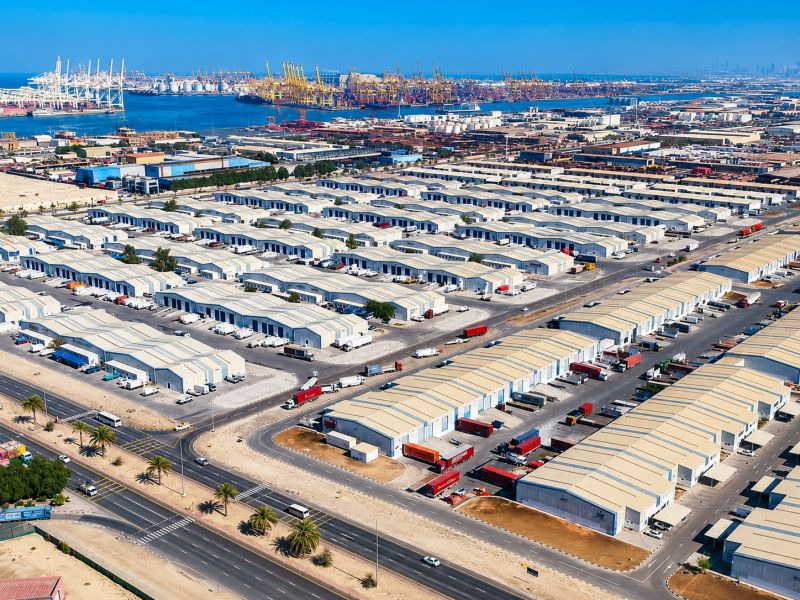
Jebel Ali Free Zone (Jafza) sits at the far western end of Dubai, right next to Jebel Ali Port, the largest deep-sea port in the region.
Oil arrives here by vessel and goes into storage. Now from there, it has to be taken by road to multiple places in the country, and also outside the country.
The oil is either Shell's or one of the other oil companies'. And this is just one of many oil storage facilities in Jebel Ali.
How Oil Moves Through Jebel Ali
Oil arrives by vessel, goes into storage, and leaves by road. Here is how it moves, and where it slows down.
The Bottleneck
The bottleneck is the loading docks. The storage facility can load and unload only 4 or 5, maybe 10 trucks at once. But one vessel comes with so many shipments. Imagine how many metric tons of oil it will be bringing with it, and how many trucks are required to take it from the storage facility across the country and outside the country.
When such a vessel came, Shell would fire a notification to all their truck drivers that so-and-so shipments were ready. All the trucks came at once, for only a handful of docks. What happened? The roundabout in Jebel Ali Free Zone got packed with these trucks.
There is no parking facility in such a busy region, so the drivers were either always driving around or waiting somewhere. Both will give them a fine. And the driver is the one taking the fine.
What that chaos cost
Fines for the drivers
Drivers were either driving around or waiting somewhere. Both will give them a fine.
Docks left waiting
There was chaos inside the storage facility also. Every time a dock finishes loading or unloading, it has to wait for the next truck to come, because the trucks cannot wait right outside.
To drive in from outside
The trucks are parked outside Jebel Ali Free Zone. If it is traffic time, it can take 30 minutes to one hour for a truck to come from outside to inside.
Lost per transaction
The amount of efficiency lost was beyond one hour per transaction, during the most critical times.
No first in, first out
Trucks were not taken first in, first out. Sometimes there is a priority shipment, and they cannot prioritise it, because it is all chaos.
For the next round of loading
The more trips the drivers do, the more money the driver makes. Imagine having to wait 8 hours just to get your next round of loading.
The New Process: How Drivers Check In Now
This is the new setup, from the moment a driver reaches the gate to the moment he is called inside. Keep scrolling to go through each step.
Enter order number
Ask the driver which order number they have come with.
Order number
Drivers Get Notified When the Next Dock Becomes Free
If no dock is free, very simple. It's like ordering food: you are notified when the order is ready.
Similar to that, the driver is asked to keep the vehicle outside the premises. The driver leaves with a confirmation that when it is his time to come inside, Shell will inform him.
And Shell does not just tell them to come. Shell sends them multiple notifications to be ready: you are the second last, you are the next. So across the journey, they are completely in the loop, and the whole cycle is alive.
SMS that reaches drivers from any region
Communication goes via SMS. Because Shell is an international company, the SMS is sent out as multi-region SMS notifications, because the drivers may come from Oman or other regions.
So it does not matter where the driver's phone number is from. A driver with a UAE number, a driver who has come in from Oman, or a driver from another region all get the same messages: you are checked in, you are the second last, you are the next, and then the call to come inside.
No app is needed for the driver to install, and there is nothing to sign up for. If the phone can receive an SMS, the driver is in the loop across the whole journey, from the gate to the dock.
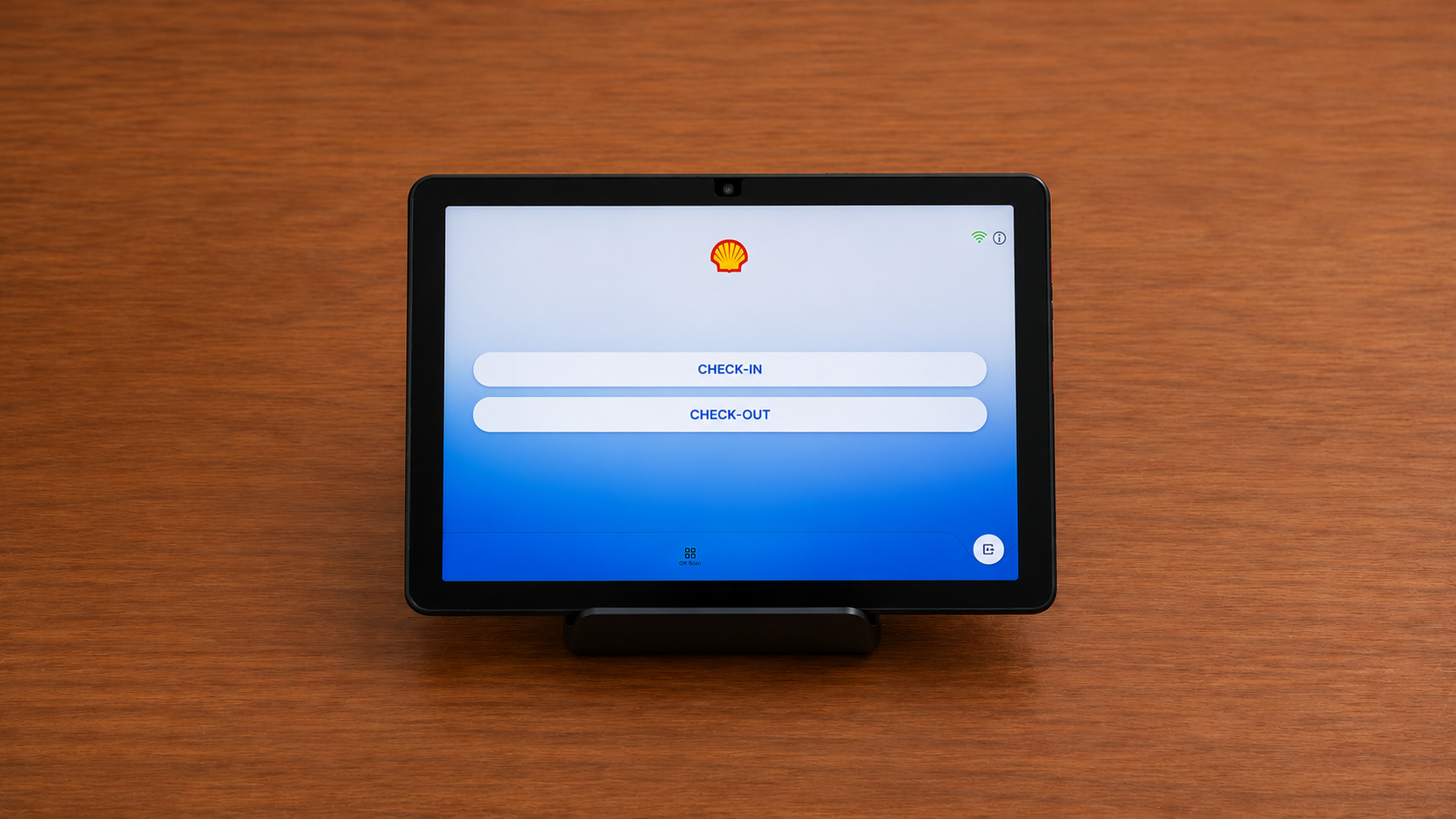
A simple tablet. No other hardware.
The only hardware on site is a simple tablet. There is no other hardware. Security stands with the tablet at the gate.
From that one screen, security checks the order number, checks the driver in, and sees if a loading or unloading dock is free.
- One tablet, with the security team at the gate
- No other hardware to install
- Order check, check-in, and dock status on one screen
- Runs as a dedicated cloud project
Everybody is given a fair chance
Without such a system, it is not only an efficiency problem. There is also the problem of the trucks not being taken first in, first out. Sometimes there is a priority shipment, and they cannot prioritise it, because it is all chaos.
There have even been complaints about who was getting the shipment first.
Now every truck is checked in against its order number and called in its turn. First in, first out.
That matters to the drivers too. The more trips the drivers do, the more money the driver makes. Imagine if you have to wait for 8 hours just to get your next round of loading. Such issues also happened in this project, and we resolved them.
Almost 37% more dock loading capacity
Not only did we solve the driver waiting, but we also solved the issue of communication with the drivers, and the efficiency of that communication.
And most importantly, we improved Shell's loading and unloading capacity. Their total vehicle dock loading capacity went up by almost 37%, with one system.
Why the docks got faster
Before, every time a dock finished loading or unloading, it had to wait for the next truck to come from outside Jebel Ali Free Zone. In traffic time, that could take 30 minutes to one hour.
Now the next driver already knows: you are the second last, you are the next. So the truck is ready to come in when the dock is free, and the dock spends its time loading, not waiting.
What's included
Everything running for Shell at Jebel Ali today.
Order number check-in
Security checks each driver in against an order number that is in the system.
Dock availability
Security sees if a loading or unloading dock is free before sending a truck inside.
Wait-outside confirmation
Drivers keep the vehicle outside the premises and leave with a confirmation.
Get-ready alerts
"You are the second last", "you are the next", then the call to come inside.
Multi-region SMS
Drivers from the UAE, Oman, and other regions all get the SMS.
First in, first out
Every truck is called in its turn, so everybody is given a fair chance.
Loading and unloading
One process for trucks coming in to load and trucks coming in to unload.
A simple tablet
The only hardware. Security stands with the tablet at the gate.
Dedicated cloud
The system runs as a dedicated cloud project.
Common questions about this deployment
What did Entry2Exit deploy for Shell?
Entry2Exit deployed its dock management system for Shell's truck loading and unloading at an oil storage facility in Jebel Ali Free Zone, Dubai. Drivers check in at the gate with their order number, wait outside the premises if no dock is free, and get SMS notifications until it is their time to come inside.
Where is the deployment?
In Jebel Ali Free Zone (Jafza), at the far western end of Dubai, UAE, next to Jebel Ali Port.
What problem did the system solve?
When a vessel came in, Shell notified all its truck drivers and all the trucks came at once. The roundabout in Jebel Ali Free Zone got packed, drivers got fines for driving around or waiting, the docks had to wait for the next truck to drive in, and the efficiency lost was beyond one hour per transaction during the most critical times.
How does a driver check in?
The driver tells security the order number. The system checks if the order number is in the system. If yes, security checks the driver in and sees if a loading or unloading dock is free. If it is free, the driver proceeds inside.
What happens if no dock is free?
The driver keeps the vehicle outside the premises and leaves with a confirmation. Shell then sends multiple SMS notifications to be ready, such as "you are the second last" and "you are the next", until it is the driver's time to come inside.
Can drivers from Oman and other countries receive the SMS?
Yes. Shell is an international company and drivers may come from Oman or other regions, so the system sends multi-region SMS notifications.
What hardware does the deployment use?
A simple tablet, used by the security team at the gate. There is no other hardware.
Is the system on-premise or in the cloud?
It is a dedicated cloud project.
Does the system keep the queue fair?
Yes. Every truck is checked in against its order number and called in its turn, first in, first out, so everybody is given a fair chance.
What results did Shell see?
Shell's total vehicle dock loading capacity increased by almost 37%. Driver waiting and communication with the drivers were also solved. You can read more on the dock management system page.
More Entry2Exit Customer Stories



Trucks queuing outside your gate?
Entry2Exit can check drivers in at the gate, let them wait outside with a confirmation, and call them in by SMS when a dock is free. One system, a simple tablet, and drivers who are always in the loop.
